

Known for inspecting cars, DEKRA brought the same meticulous standards to a conference hotel in Wart.

Contents
How a training center for test engineers became one of Germany’s most sustainable conference hotels.
The last ten minutes are crucial. Anyone driving to the DEKRA Congress Hotel in Wart leaves Stuttgart, the highway, and eventually even the last town sign behind them. Then comes the forest. And meadows. And even more forest. “The worst thing guests see on their way here is a squirrel,” says Jan von Schaper, Head of Business Development, and you quickly realize that this statement is no coincidence. It says it all.
It’s an unusual hotel that I discussed with him. One that was never actually meant to become a conference hotel. One that voluntarily gave up its hotel stars. And one that, in the middle of nowhere, achieves an occupancy rate that many downtown hotels can only dream of. To understand why a location without an S-Bahn connection and without walk-in customers works so well, you have to take a step back. Because the answer has a lot to do with the hotel’s origins, with a dose of courage, and with a spirit of experimentation that you find in the most unexpected places. A conversation about creative emptiness, returned stars, and the question of why some companies willingly put up with a 50-kilometer commute.
A hotel that never meant to be one
To understand what makes this hotel tick, you have to go way back. In 1977, a DEKRA training center was established in Wart, intended for the training and continuing education of the company’s own testing engineers. There was already a hotel there, but that’s another story, it was built in the mid-1980s and operated for a long time under the Best Western brand.
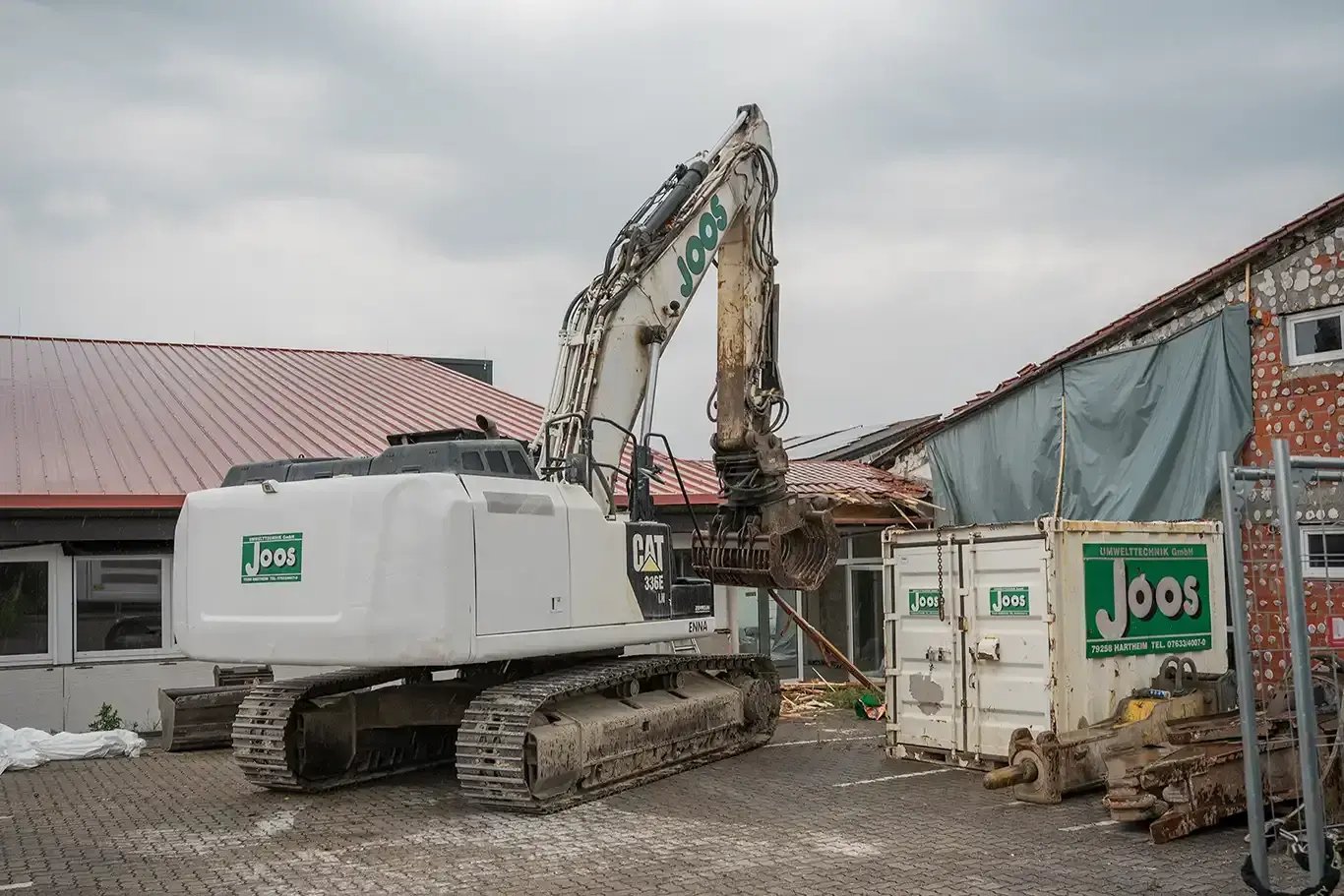
The current new building wasn’t added until 2020, and the timing could hardly have been worse.
“We were open for eight days, then we had to close again,” von Schaper recalls of the opening in the middle of the first lockdown. A new building, freshly completed, and then a pandemic that brought the entire events market to a standstill overnight. What followed was a pattern of opening and closing over months, half a year with the pandemic, half a year without, as he describes it. The old hotel building has since been completely abandoned and converted into apartments; this renovation was completed not too long ago. Today, operations are conducted exclusively in the new building, which is currently being expanded by another 56 rooms.
It’s particularly revealing how the hotel came to open its doors to outside guests in the first place. After all, that was never part of the plan. In the 1980s and 1990s, a local savings bank or cooperative bank from the region would occasionally inquire whether they could use the large hall, which spans 900 square meters. If space happened to be available and it didn’t involve too much effort, they’d say yes. So word slowly got around that it was indeed possible to host events in Wart. It was an organic, almost casual growth into a business that today forms the core of the hotel.
The real breakthrough, however, didn’t come until after the pandemic. And it was a systematic effort. The hotel launched a massive advertising campaign, specifically targeting companies in the region and beyond, and for the first time confronted the tough question of competition. Von Schaper and his team analyzed which categories of conference hotels actually compete with Wart, at what level they stand in relation to whom, and where they need to make targeted improvements. “We really tried everything,” he says, describing a culture of experimentation in which not only the successes remain visible, but the detours are also part of the story. Take, for example, a foray into the private customer business, a wine-tasting event that ultimately drew exactly four guests. He recounts such stories without hesitation, and it is precisely this that makes the hotel feel approachable.
The corporate group remains the backbone to this day. Forty to fifty percent of the workload still comes from DEKRA itself, and training and continuing education continue to take place in-house. This is complemented by the DEKRA Academy, a sister company that offers the same training and continuing education programs to participants from outside the group, throughout Germany and Europe, covering topics ranging from occupational safety to fleet inspections and expert reports. Von Schaper compares it to a business school. This academy also holds its sessions in Wart.
And he describes a broader transformation that extends far beyond the company’s own walls. More and more of the group’s own facilities and conference centers are opening up to the outside world to bring in fresh revenue from external sources. The reason is as simple as it is obvious. Those who do not open up remain an anomaly in a corporate world that has little to do with their actual core business. Those who open up become an independent source of value. For Wart, this means an exciting dual role: firmly anchored within the corporate group while simultaneously succeeding in the free market.
The inspection DNA you can feel in the hallways
You might think a hotel is just a hotel, no matter who owns it. At DEKRA, it’s different—and you’ll notice that sooner than you think.
No other organization in Germany, Austria, or Switzerland implements all occupational safety measures, inspections, and site surveys as consistently, says von Schaper. And he says this without a trace of arrogance, more like someone who knows many other companies from the inside and can therefore pinpoint the difference precisely. Elevator inspections, occupational safety inspections, and regular inspections of work equipment, none of this is treated here as a bothersome afterthought, but rather as a matter of course.
"You won’t find another hotel or conference center where every inspection is carried out as rigorously as it is here. We want guests to experience the same sense of security and confidence that people associate with a testing and inspection organization."
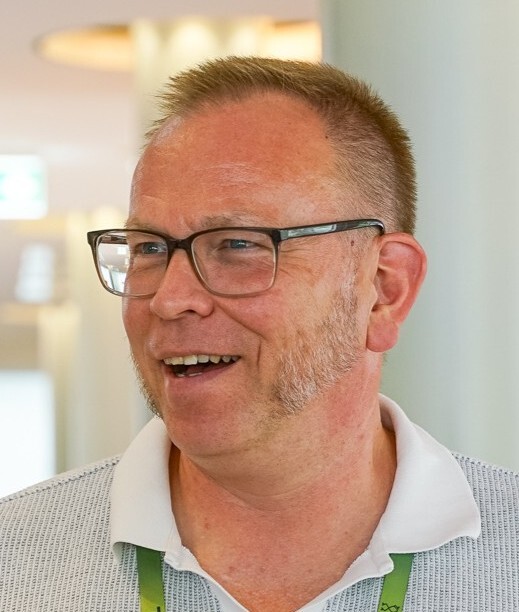
Jan von Schaper
Head of Business Development Management | DEKRA Congress Center & Hotel Wart
This is evident right down to the individual conference rooms. In each one, there are lists of evacuation routes and fire extinguishers, along with the names and phone numbers of all first responders and secondary responders. Before every conference and every training session, there’s a welcome briefing explaining what to do in case of fire or an emergency, where to find help, and how to respond. What’s often just a quickly checked-off formality in many other buildings is part of the DNA here.
What sounds like a tedious obligation at other venues is a way of life at Wart. For procurement professionals and compliance officers, this is more than just a nice anecdote. Anyone who books events for a company bears responsibility for the participants, and a venue that demonstrably and consistently takes occupational health and safety seriously alleviates some of that concern.
It’s remarkable how relaxed von Schaper is about the competition. Other testing organizations even come to Wart as guests themselves, for example, when automotive groups unveil new products and the technical testing community gathers. They engage in friendly competition and, in the end, are happy to meet up with their neighbors in the countryside. The reason for this is also structural in nature, as DEKRA conducts a large portion of its training in-house, using its own facilities and developing its own approaches. This decades-long commitment to training and continuing education has shaped the company long before the first external conference guest arrived.
Returned Stars, Committed to Sustainability
Perhaps the boldest decision was made during the pandemic. Together with the hotel manager, von Schaper made a choice that is rare in the industry. The company returned all of its hotel stars.
The reasoning behind this is strikingly simple. Stars impose limitations. While they serve as a categorization system, the actual quality can vary greatly within a single category, and above all, they restrict purchasing options. Some companies are only allowed to book two- and three-star properties, while others can book only four-star properties. A hotel that can be pigeonholed in this way automatically loses a portion of the market. Instead of letting itself be constrained, Wart decided to take a different path and fully committed to certified sustainability. At a time when that was by no means mandatory.
“Back then, anyone could say, ‘We practice sustainability,’” says von Schaper. “It was always clear to us that we also had to provide verified proof of that.” There it is again, that verification mindset, this time in green. Sustainability shouldn’t remain just a claim; it should be certified, verifiable, and demonstrable, even if you’re already living it every day. The company examined the sustainability certification systems emerging from all directions at the time and decided to measure itself against Green Sign, one of the leading systems in Europe.
"Whenever we take on a sustainability initiative, it has to be certified, verifiable, and backed by evidence. That mindset naturally comes from our DEKRA heritage."
Jan von Schaper
Head of Business Development Management | DEKRA Congress Center & Hotel Wart
This approach led to an entire collection of certifications. Green Sign at the highest level, plus EcoVadis Platinum, an accolade achieved by very few companies worldwide, which also stems from the fact that the entire DEKRA Group is strongly positioned in terms of sustainability. Added to this is the nomination for the Green Monarch, a relatively new award designed specifically to highlight flagship projects in the industry. Von Schaper finds one aspect of this particularly important. There are countless companies that have long been doing a tremendous amount for sustainability but have never spoken about it. Such initiatives give them the chance to reveal what’s hidden and thereby demonstrate that the effort is worthwhile.
As convinced as the company is of its direction, von Schaper takes a level-headed view of the current situation. Sustainability, he notes, is simply not yet the decisive criterion. In the end, it’s still price, and price again, that counts, along with location. This honesty is refreshing, precisely because it comes from a company that committed to sustainability early on and consistently. Yet the direction is clear. The trend is clearly on the rise, driven by EU directives and national laws that make sustainability mandatory for businesses above a certain size. It’s almost impossible to process a bid request without sustainability issues coming up. Those who, like Wart, acted early don’t have to play catch-up now; instead, they can confidently point to certifications that others are only just laboriously acquiring.
Days When There’s Nothing but the Black Forest
Back to that squirrel. The location, 50 kilometers from Stuttgart, sounds like a disadvantage at first. No quick S-Bahn ride, no downtown location, no spontaneous accessibility. Von Schaper turns this supposed shortcoming into a selling point and a convincing one at that.
“If you want to develop something creative, a strategy, then first of all you need space,” he says. A clear head, a relaxed body, not thirty or forty simultaneous impressions like in the big city. Anyone who drives the last few kilometers through forests and meadows arrives already relaxed. It is precisely this space, this conscious process of finding peace, that is the firm’s true product.
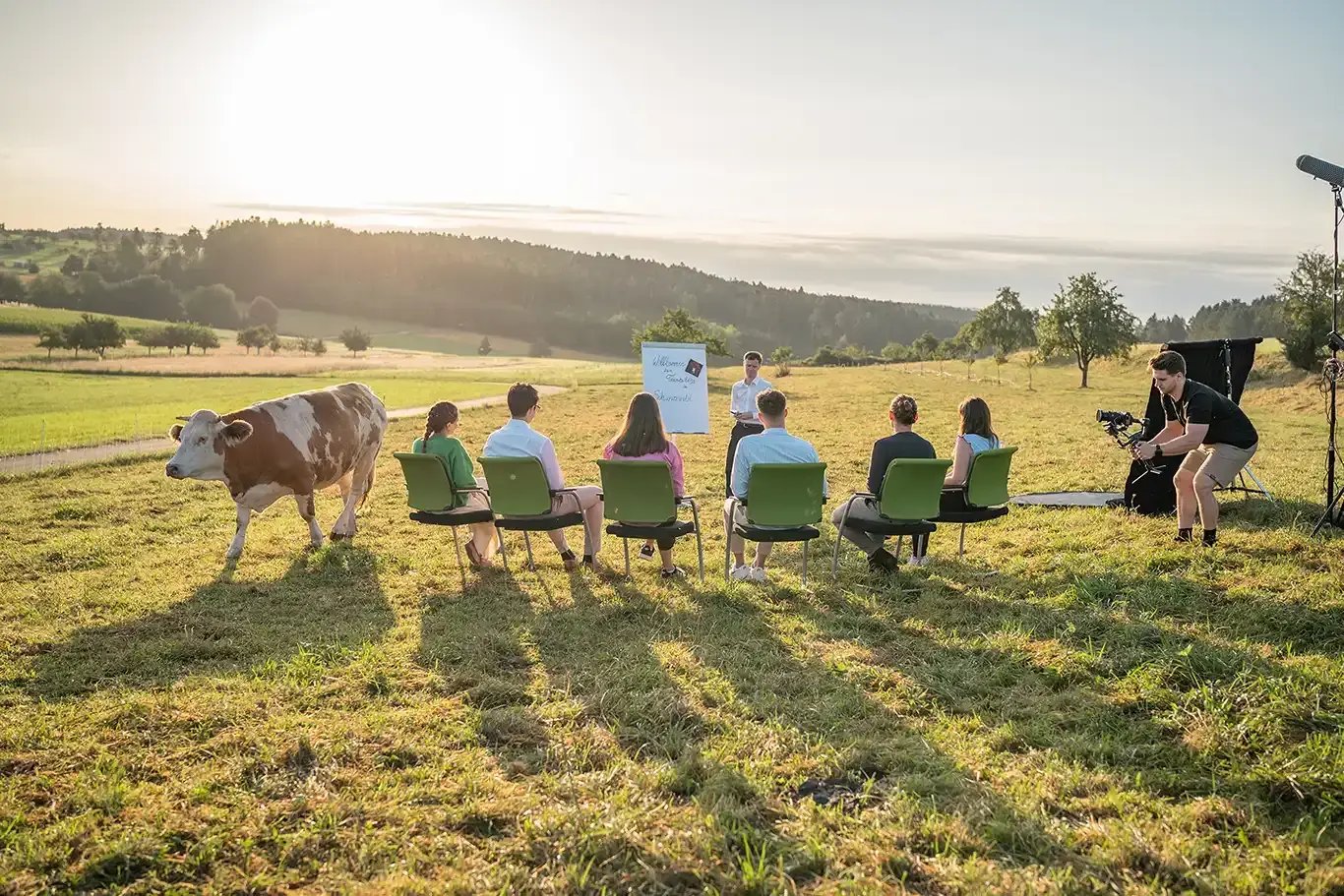
Creativity and strategic thinking don’t need sensory overload, they need the opposite.
"There’s nothing here but the Black Forest. For the last few minutes of their journey, guests are literally driving through forests and open countryside, so by the time they arrive, they’re completely relaxed."
Jan von Schaper
Head of Business Development Management | DEKRA Congress Center & Hotel Wart
Then there are the open spaces. A scavenger hunt for 400 people, a barbecue for 800, all of that can be organized here. When it comes to training and professional development, a team-building event is often part of the program. In the evenings, participants come together to eat, relax, and exchange ideas. And it is precisely in this exchange, says von Schaper, that the true value lies. “How did you understand that today? What was the most important point for you? Did you see it the same way I did?” Conversations like these only happen when people sit together, and that’s exactly what the venue is designed for. Sometimes a CEO stops by for a kind of fireside chat; other times, there’s a torchlight hike through the Black Forest. People who come here are deliberately seeking out this kind of setting.
Celebrating is also part of the experience, and von Schaper doesn’t downplay it at all. A team that has shared an experience feels more closely connected afterward and can work together more effectively. The social bond that a good event creates isn’t just a nice side effect, it’s often the actual purpose.
This is precisely where it’s worth taking a closer look at a phenomenon that’s currently a major focus in the industry: so-called “blended travel”, that is, the deliberate extension of a business trip to include personal leisure time. It’s a topic that’s been on my mind professionally anyway, so I wanted to ask Jan von Schaper whether he’s observed this among his guests. Who, if not a hotel in this location, would benefit from this? His answer is both honest and insightful. Right here at the hotel, this trend tends to fly under the radar, and the reason is a very practical one: we’re usually already fully booked for the following night. Blended travel is often a spontaneous decision, guests have gotten to know the hotel and want to stay one more night, but it’s precisely this spontaneity that’s difficult to accommodate when the venue can host 2,500 people but only has 124 rooms available. On many days, the demand for rooms significantly exceeds the supply, which makes planning challenging, especially when it comes to scheduling and catering.
So the hotel flips this idea on its head instead of chasing after it. Rather than relying on spontaneous extensions after the fact, they plan ahead. For example, if a company arrives on Monday for a conference, employees receive a discount code for an earlier arrival as early as Sunday. Those who wish to can arrive earlier, settle in, and enjoy themselves before work begins. Von Schaper calls this “Pre-Planned Travel,” the plannable version of the trend. It’s a great example of how a hotel can turn its own limitations into a smart solution, rather than accepting them as a disadvantage. The trend is a good one, he says; you just have to adapt it to fit your own structure.
One point that’s important to him and one that’s easily overlooked is that traveling to the countryside isn’t a complete waste of time. There are people who consciously appreciate the longer, more leisurely journey, perhaps because they want to live a car-free lifestyle. And yes, public transportation connections from Munich, Stuttgart, or Berlin work, they just take longer. Rural public transit takes some getting used to, but it’s there. By the time you arrive, take a shower, and head to the conference, you’ll have long since made the transition from everyday life to a focused mindset.
What this means for shopping and event planning
For anyone who purchases or plans events, one part of our conversation was particularly insightful. Von Schaper has a very clear idea of what makes a good request, and it doesn’t start with the budget—it starts with the goal.
“We always ask: Has this event been held before? What purpose does it serve? What impact do you want to achieve? What change do you want to address?” Behind this lies an approach that goes far beyond simply renting out space. An event needs a goal, not just an occasion. Whether it’s about knowledge transfer, team spirit, or preparing an organization for an upcoming change, it makes a decisive difference in how the event is designed. Purchasers or planners who have already answered these questions for themselves will end up with a better, more effective event. That’s a lesson you can take away from Wart, regardless of where you ultimately book.
"The most important thing is that we start by talking to our guests. Where are they headed? How can we best support them in getting there? In the end, everything revolves around the objective of the event."
Jan von Schaper
Head of Business Development Management | DEKRA Congress Center & Hotel Wart
And what constitutes a bad inquiry? There are hardly any, says von Schaper, and he means it. As a venue in the countryside, they initially treat every inquiry as a good one. This is a deliberate distinction Wart makes from a conference center in Berlin or Munich, which, simply due to its central location, handles a far greater volume of inquiries. Those located in the countryside generally receive targeted inquiries from people who are looking for exactly that: meetings in nature. It’s also simply harder to find Wart on a map than Berlin, which is why the venue has employed two digital marketing specialists for over two and a half years whose sole job is to increase its visibility. Anyone who doesn’t know where Wart is located first has to find the venue online. And anyone who wants to organize a smaller event on their own can plan and request a suitable venue like this one directly online.
Things get tricky, if at all, when expectations are unrealistic, especially regarding value for money. Anyone who inquires with a budget of ten euros per night will encounter a venue that operates on a budget and has to be cost-conscious. Yet even here, there’s remarkable flexibility. Because the venue is large and does a lot of business with corporations and in the business-to-business sector, it can afford to be flexible. For charitable or social causes, or for clubs and organizations, the management takes a close look, clarifies the available budget and the purpose, and accommodates requests wherever possible. At Easter or Pentecost, the large hall is sometimes made available for a church service without generating a profit. Not every square meter has to generate maximum profit. This fosters a connection with the region and puts people at the center—not just the profit margin. It’s a luxury that a hotel of this size can afford—one that a purely private hotelier, who must stay in the black every month, could hardly afford.
The fact that this approach works out overall is demonstrated by a figure Schaper mentions almost in passing. Anyone who has ever held a meeting in Wart almost always comes back. About 98 percent of the events are repeat business. In an industry where every bid is fiercely contested, this is an extraordinary testament to trust—and perhaps the strongest argument of all. After all, no certificate or award carries as much weight as a customer who voluntarily returns.
A venue that reinvents itself while staying true to itself
In the end, what remains is the image of a house that manages to do two things at once that actually seem to contradict each other. It constantly reinvents itself, experiments, discards ideas, tries again, and yet maintains a reliable standard throughout. Von Schaper describes this very aspect as the true USP. It’s not a single outstanding feature that no one else offers, but rather the synergy of all these elements. The versatility, the vast spaces, the palpable friendliness of the staff, and the sustainability all come together to create something that is difficult to replicate. Individually, each element could be surpassed somewhere else, but it is in their combination that the strength lies.
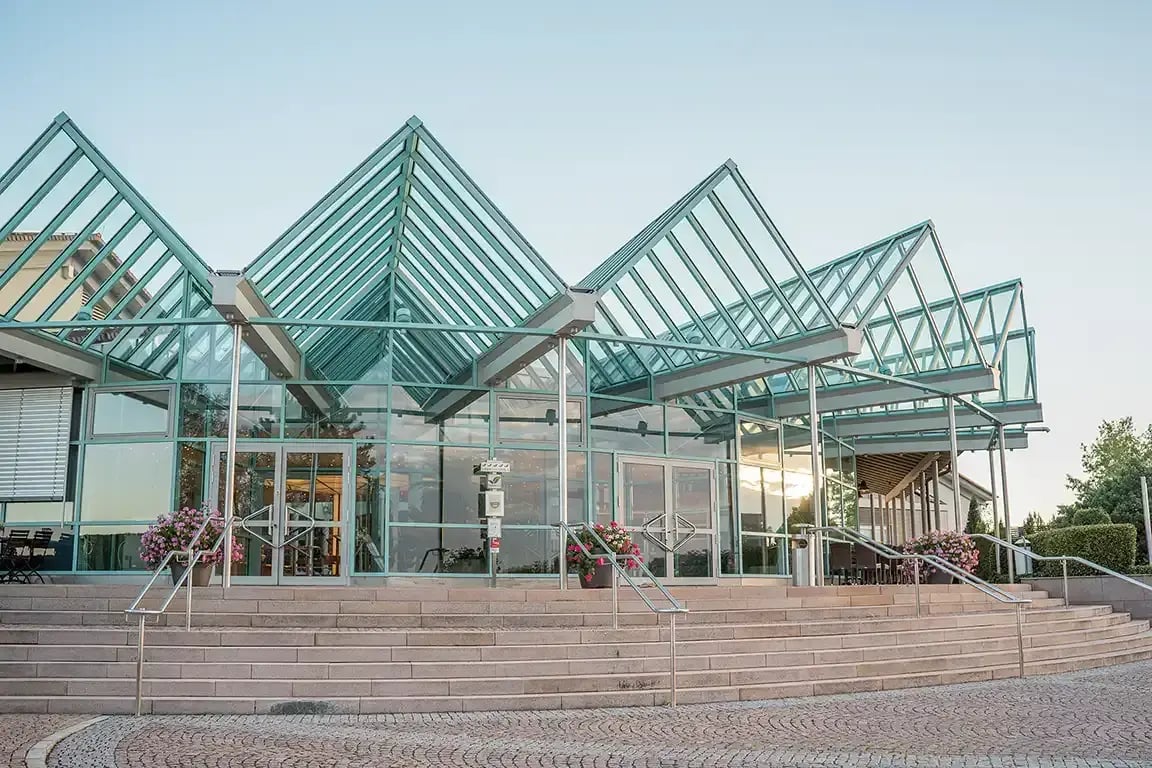
This combination also explains why the topic of culinary variety comes up so often. From an 18-course meal for 30 people to one for 400, or even a simple barbecue for hundreds, almost anything is possible. Add to that solar panels on the roofs, a fleet of vehicles that runs entirely on electricity, meat-free days in the staff restaurant, and a thoughtful approach to portion sizes to minimize waste. It’s many small building blocks that come together to form the same picture. A company that doesn’t just make claims, but puts them into practice every day.
And how would von Schaper explain in a single sentence why the Black Forest of all places and this venue of all places? He pauses briefly, then utters the sentence that really sums it all up: “Come visit us if we can effectively showcase your event through our spaces.”
Any buyer or event planner looking for a venue where an event becomes more than just a date on the calendar will find an unusual and worthwhile option in Wart. A venue that grew out of a training center, that has safety in its DNA, that had the courage to go against the grain, and that has turned the tranquility of the Black Forest into its signature offering.
Find the right hotel for you, just like the DEKRA Congress Center & Hotel Wart. Where you're planning an event or looking to streamline event procurement for your company, book your appointment here.